

How Claude Code Helped Me Create 2 Apps In Less Than 2 Hours
What should I create next?

At the beginning of last year, I started a new phase of my professional writing career. I started playing around with ChatGPT and other AI programs, generally called large language models (LLMs).
It started with ChatGPT. Then I subscribed to Gemini, and Perplexity. By the end of the year, I had subscribed to Claude.
I’ve spent a lot of time playing with ChatGPT. For the most part, I’ve done a lot of research, used it edit my writing (both fiction and nonfiction), tested it with some creative writing exercises, used it to assist with game creation, and I’ve even done some coding. My experience with Gemini has not been as extensive, but I’ve used Perplexity for deep research projects. In the last week, I’ve been experimenting with Claude Code.
Today, I want to share some thoughts on my recent experience with Claude Code.
What Is Claude Code?
First, an introduction to Claude.
Claude.ai is an LLM created by Anthropic, an AI company that launched in 2021. Anthropic’s family of LLMs and AI tools are named Claude. These tools are a direct competitor to the more popular ChatGPT. Its latest and most powerful iteration is Claude Opus 4.5.
Claude has been praised for its advanced coding skills, reasoning, and ability to read and write text. As a writer, these are important skills that have the potential to enhance the work that I do for clients as well as augment my own personal writing projects. I’ve tested it on its ability to perform long-form editing on my fiction and was impressed with its outputs. Recently, I’ve turned my attention to coding.
Enter Claude Code: a special Anthropic tool designed to allow anyone to develop projects that require code (such as apps, games, websites, and more) without themselves needing to know code.
If that sounds like a tall order, it is. ChatGPT makes the same claim. And when I tested ChatGPT on its coding skills, what I learned was that I needed to have some understanding of code in order to make the most out if its use. For instance, it took me the better part of a whole day to create a simple web app that would allow anyone to enter a theme or topic and receive a short flash fiction story in return. Most of my time was learning how to work with developer tools ChatGPT recommended.
For the most part, ChatGPT saved me a lot of time. If I had tried the same project without it, I’d have never completed the project. ChatGPT not only made it successful, but did it fairly quickly (relative to my learning curve) and taught me some things along the way.
That brings me to Claude Code. In the last week alone, I’ve developed two apps without knowing any code or needing to learn to use developer tools. That’s amazing!
Let’s talk about the projects.
My Personal FeedReader
Years ago, in the early days of blogging, I would keep up with my favorite bloggers through an RSS aggregator. These were quite popular at the time and everyone I knew had one. You could get one for free in several corners of the Web.
Over time, industry changes led to RSS aggregators consolidating and transitioning into proprietary products. If I wanted to keep with my favorite bloggers and news websites, I either had to pay for an aggregator to get the most benefit out of it or be consigned to minimal use. I eventually quit subscribing to news feeds and blogs unless I could do so by email. Naturally, that led to email inbox bloat.
The simple solution has always been developing one’s own personal feed aggregator. But, unless one had development skills, one couldn’t do so. That has changed with the advent of no-code development tools like Claude Code.
It took me about 20 minutes to tell Claude what I wanted and to talk through a few simple tweaks to get my own personal RSS desktop aggregator. I have yet to populate it with all the content I want to follow, but here’s the simple interface that allows me to add categories, add RSS feeds I want to subscribe to, and easily delete the ones I no longer wish to follow.
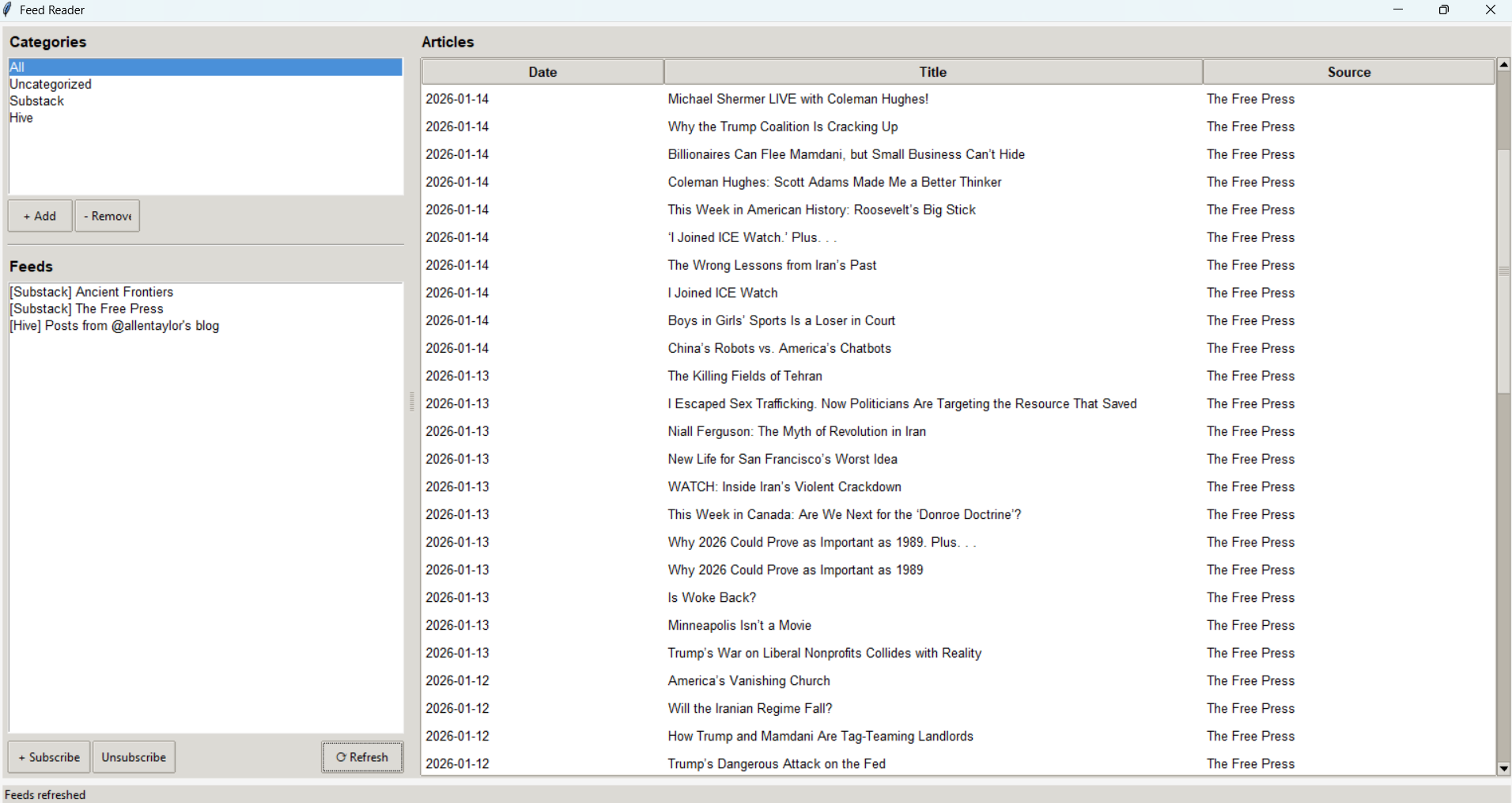
As you can see, I can view all the feeds in one panel, narrow the field to just one category, or focus only on a single feed if I want to see the latest content published by a single author, website, platform, or newsletter. Not bad for less than a half hour’s work.
A More Ambitious Project Centered on Hive
If you’ve been following me for some time, you know I’m smitten with a social blogging protocol and platform called Hive. On Hive, creators and curators earn cryptocurrencies for creating new content or curating the content of others. It’s simple, decentralized, and easily monetized.
One of the beautiful things about Hive is its simplicity. However, simplicity also has its drawbacks. For instance, if you go to any particular user’s posts, you’ll see a string of content organized from latest to earliest, but there’s no way to reorder these on the page.
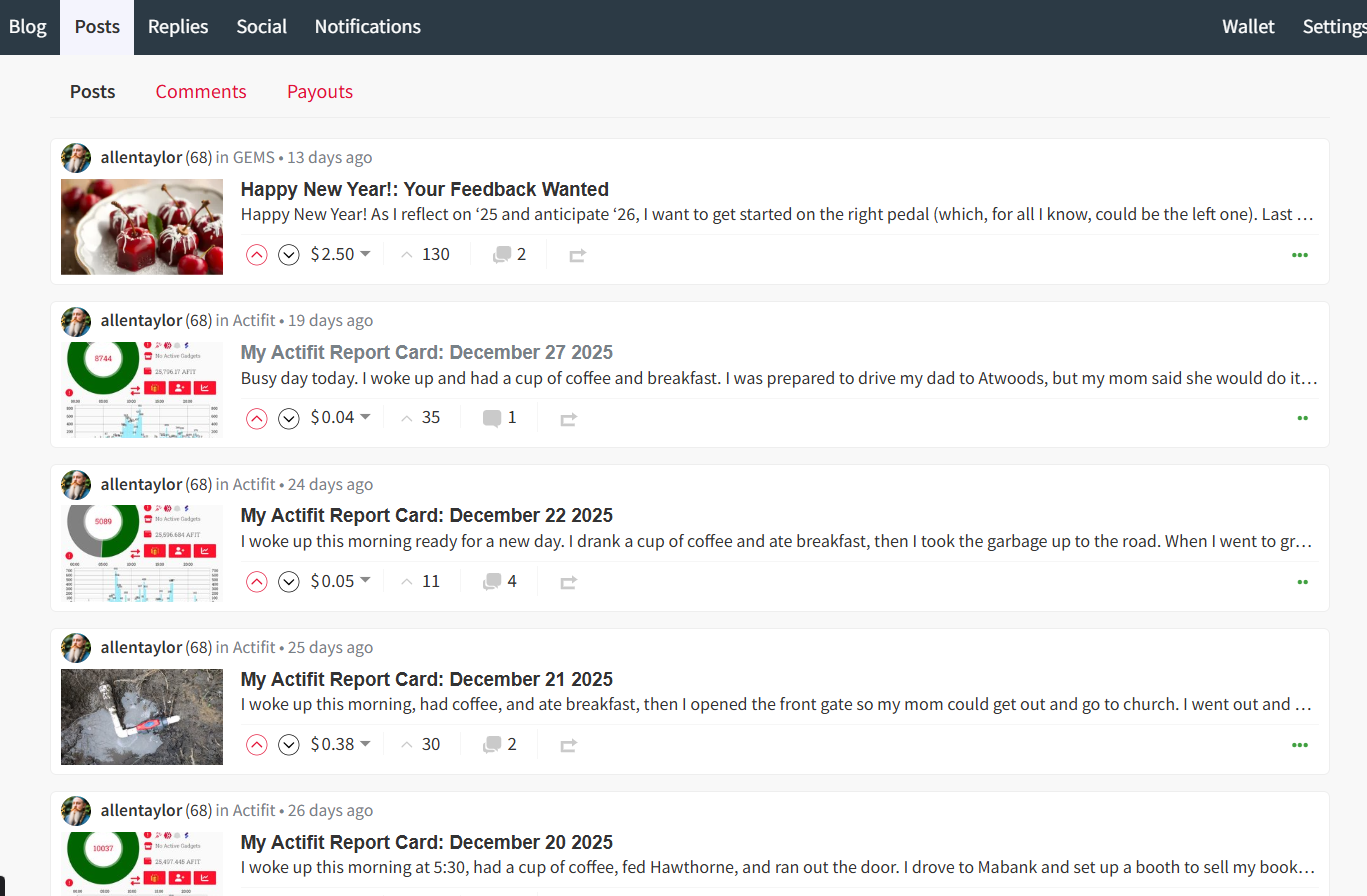
Even if one were to visit one of the more popular and robust front ends, such as InLeo, Ecency, or PeakD, one would still not be able to reorder the posts in any meaningful way.
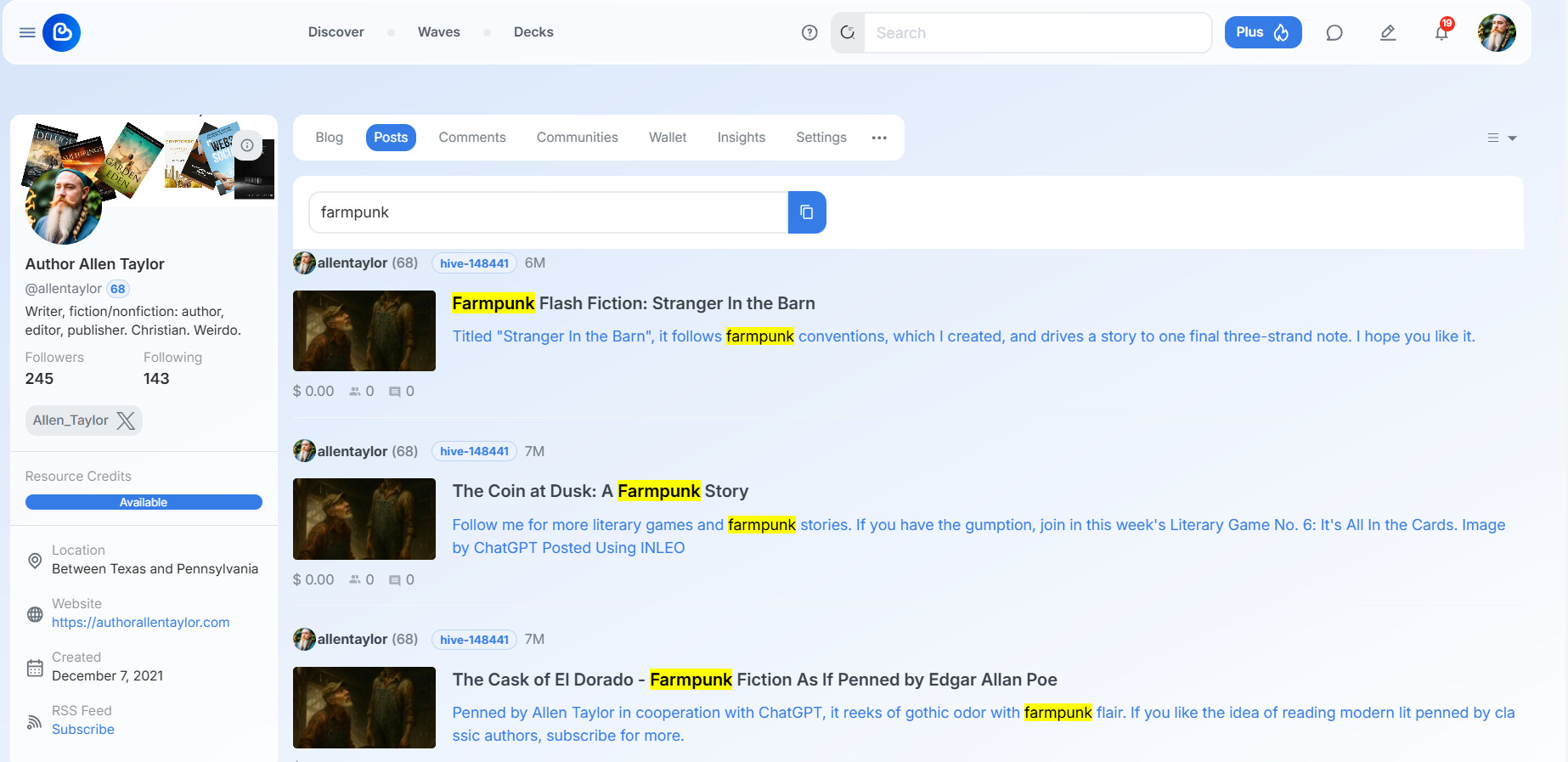
To be fair, each does have its own unique way of organizing a user’s content. InLeo, for instance, does allow users the ability to order Threads (short-form content similar to Twitter) by Latest, Oldest, and Trending. But it has no way of categorizing blog posts. Ecency provides a search bar that allows users to search for content by keyword and filter blog posts for a certain account by that keyword; for example, on my blog, you can search for all the posts related to “farmpunk” and see a fairly good list of posts that reference that keyword. On PeakD, posts can be filtered by a list of tags, but that list is incomplete.
What if one wanted to filter an account’s content by category and see it in a columned magazine-style layout?
Currently, there’s no way to do that. So, I decided to play around with Claude Code and asked it to create a web app that allows me to view my own Hive posts categorized in a simple 3-column magazine layout. It took about an hour of back and forth between Claude Code and me to work out the details, but I was very impressed with the outcome. It’s not perfect, but it’s a darn good start.
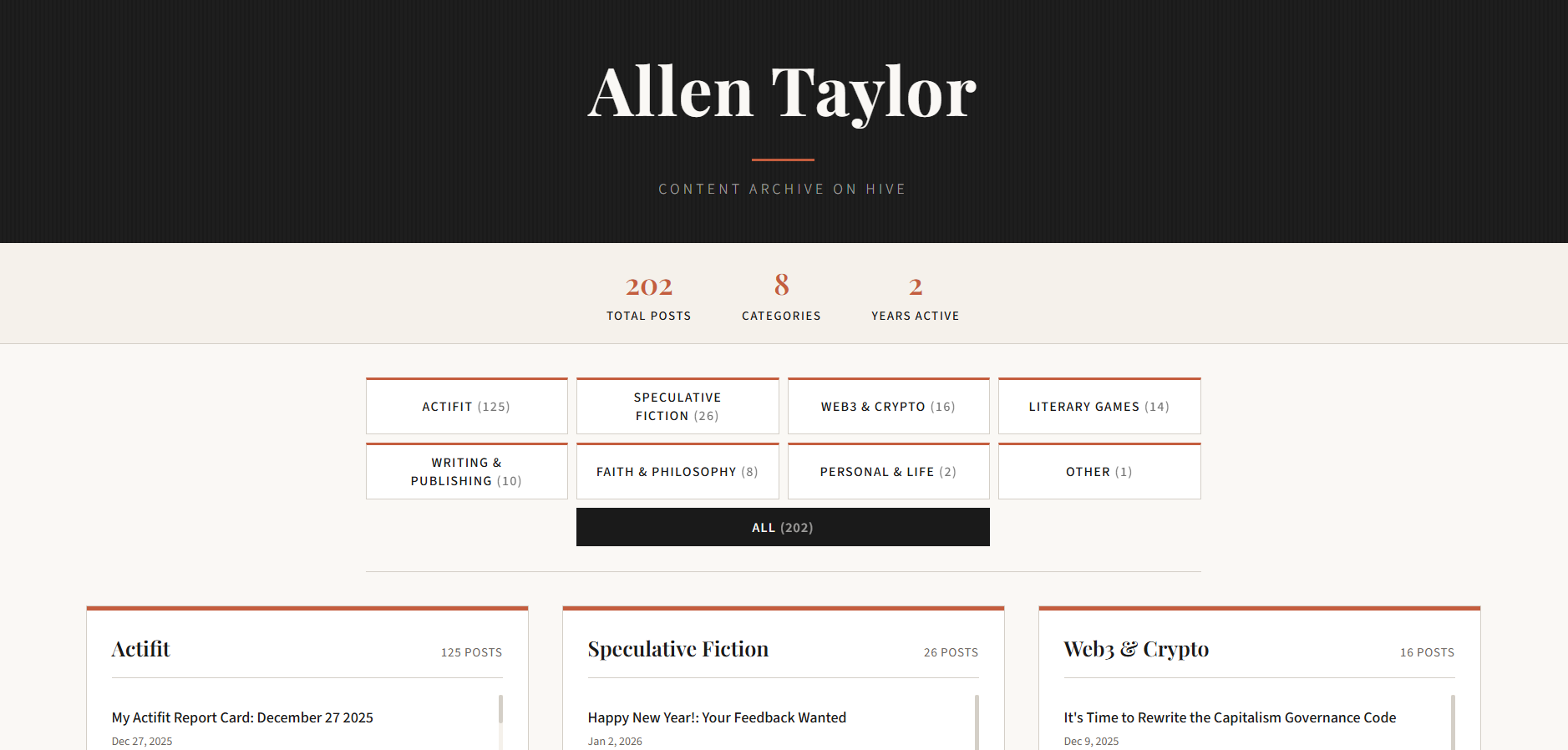
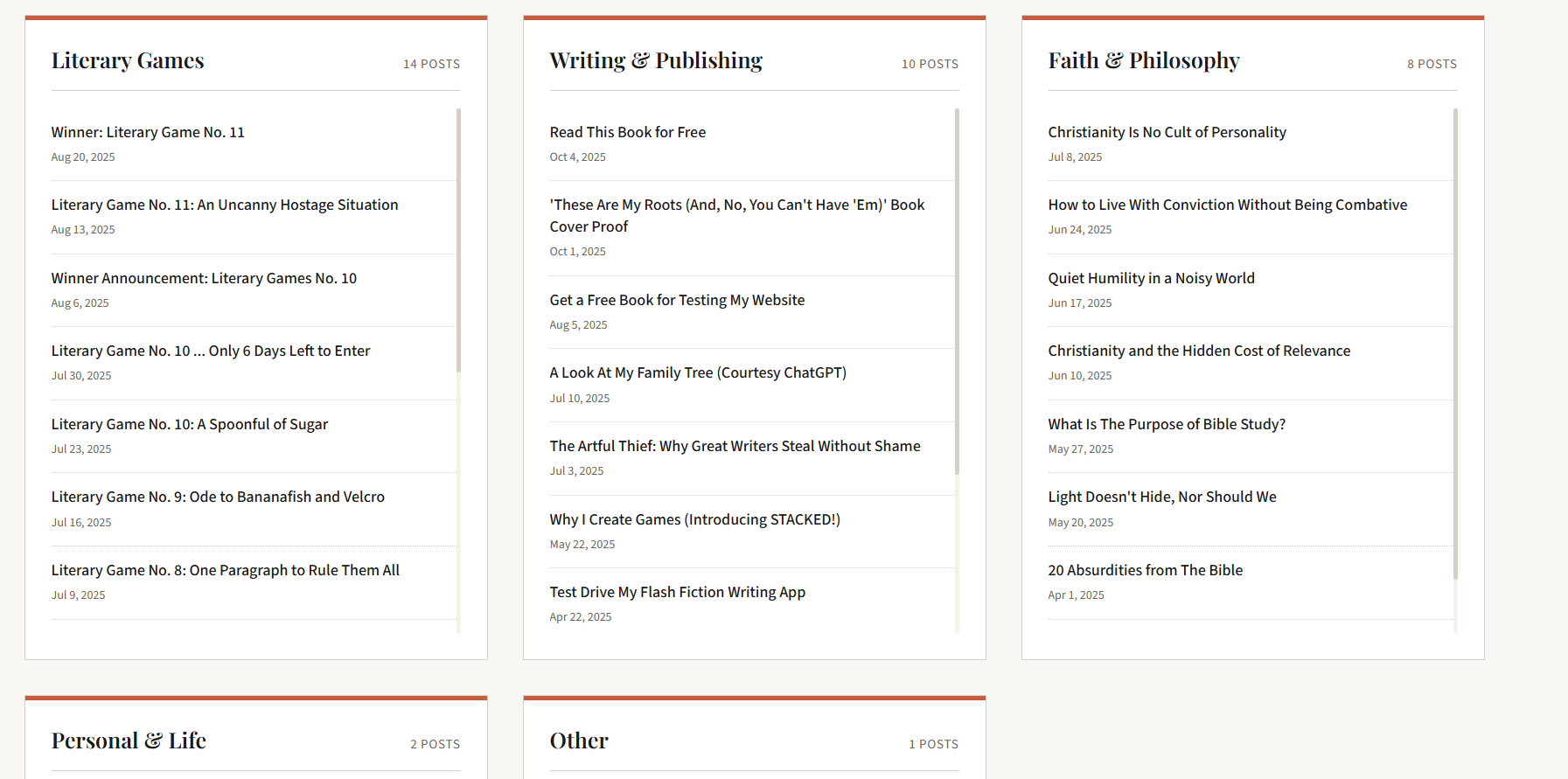
In each content panel, there’s a scroll bar that allows me to scroll down and see more posts. In the top right corner of each content panel, the tool tells me how many posts are in that panel. Aside from Years Active saying 2 (it should say 4), all the information is accurate. However, to speed up load time, I restricted the content feeds to the last year. I could easily change that should I want to categorize more back posts.
Currently, this web app is published locally and not available publicly. But I could see it being useful to other Hive users who may want to categorize their own posts and make them publicly viewable in a magazine format. Would you agree?
My Next Project is an Artifact
This morning, I browsed through some Claude Artifacts and discovered that several other no-coders have used Claude to create apps that are publicly available through Claude. These apps are called artifacts.
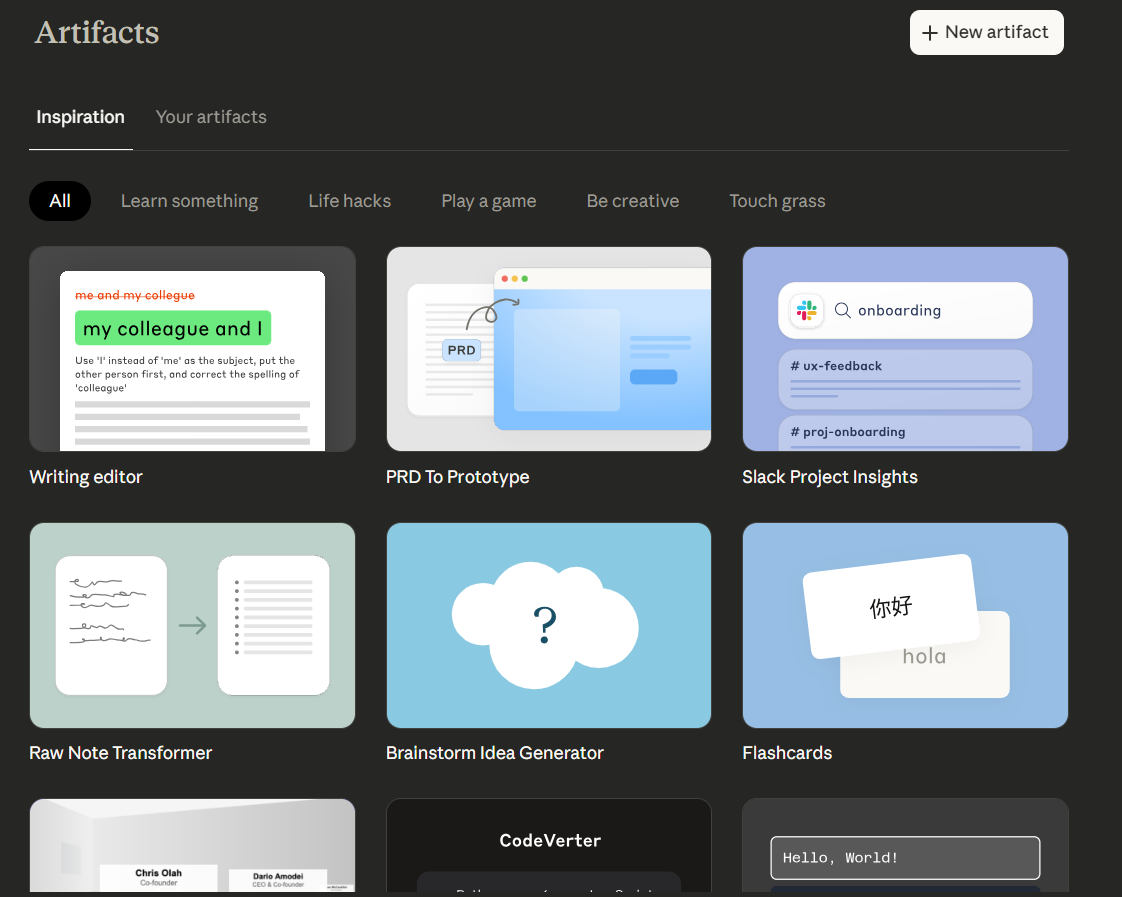
Anthropic calls these artifacts “interactive apps”. What that means is a person can create one, publish it to a public repository, and others can adapt the app and make changes to it for their own use. Any changes made by others are personalized for them and do not affect the original created by someone else. As you can see, they can exist in different categories. I decided to create one of my own.
After about half an hour, I got real close to my plan’s limit on token usage. That tells me that I may have to upgrade my plan if I continue to play around with app development through Claude Code. At present, I’m not ready to do that. So, I ended my session for today. But I’ll revisit my artifact later.
I’m not ready to disclose what my artifact is just yet, but I will say it falls into the productivity category. When I finish development, I’ll let you know.
Now it’s your turn. How can I improve these apps I’ve created through Claude Code? Can you think of anything you’d create—if you had the chance?
Allen Taylor is an author, creator, and freelance writer/editor. He’s always thinkering.
The 20-minute RSS aggregator really demonstrates the productivity leap here! What strikes me is how dunno, the barrier between having an idea and actualizing it has collapsed in ways that seemed impossble just a year ago. I've experienced similar moments where AI-assisted development turned weekend projects into hour-long sprints. The Hive categorizer solving a real platform limitation shows the best use case - building tools mainstream providers haven't priorritized yet.